
Work 2026
Hoard
Turns the Instagram reels you save into notes you can search.
- Platform
- iPhone, iOS 17 or later
- Status
- In beta on TestFlight; coming to the App Store.
- Available in
- United States
- Published by
- Nfemz LLC

The idea
You save a reel because it had a recipe, a workout or a site worth remembering, and then it disappears into a folder you never open. Hoard keeps the useful part.
Share a reel to Hoard from Instagram and it becomes a note: the ingredients and steps, the sets and reps, the links and fonts it mentioned, each marked with where in the video it came from. The notes are searchable, they sort themselves into collections, and you can ask your library a question in plain words.
Screens
-
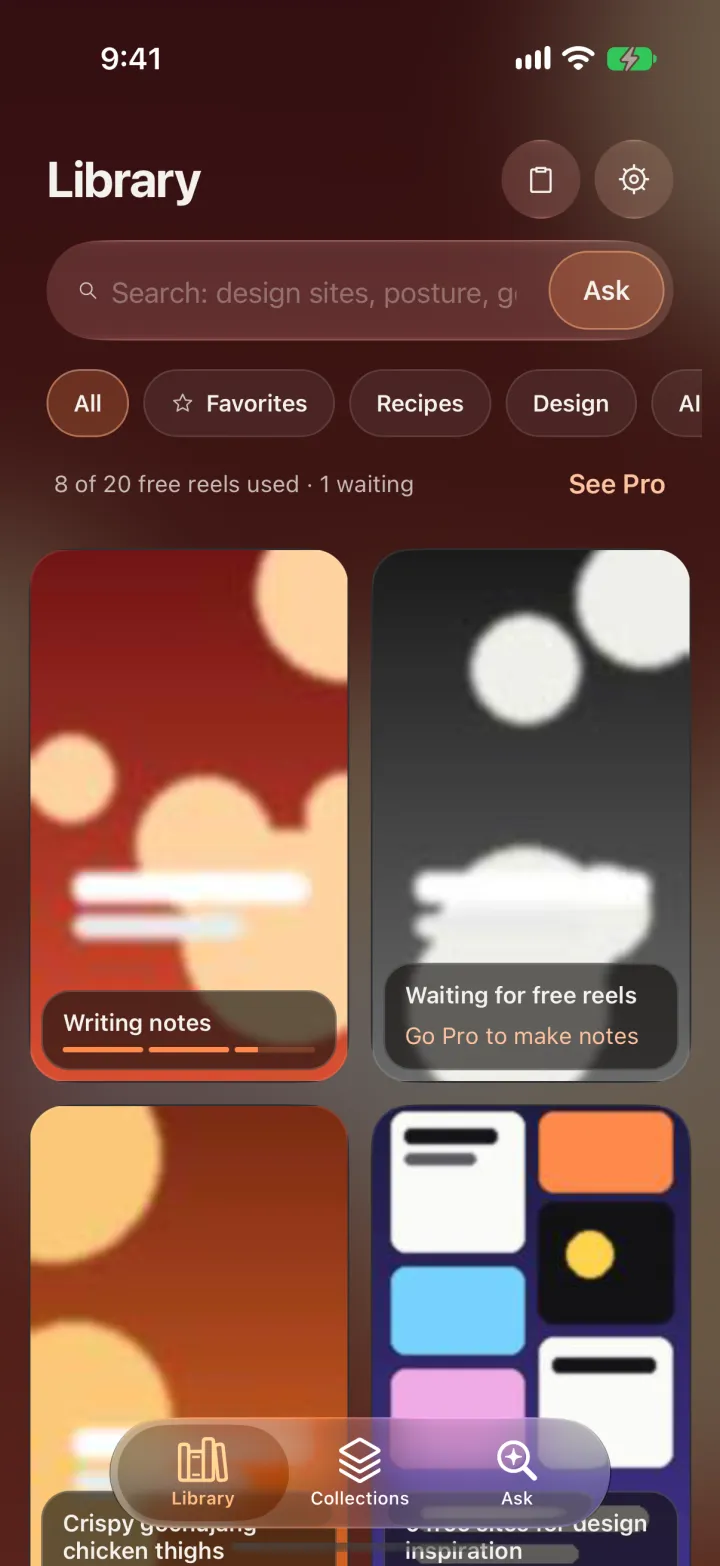
Library -
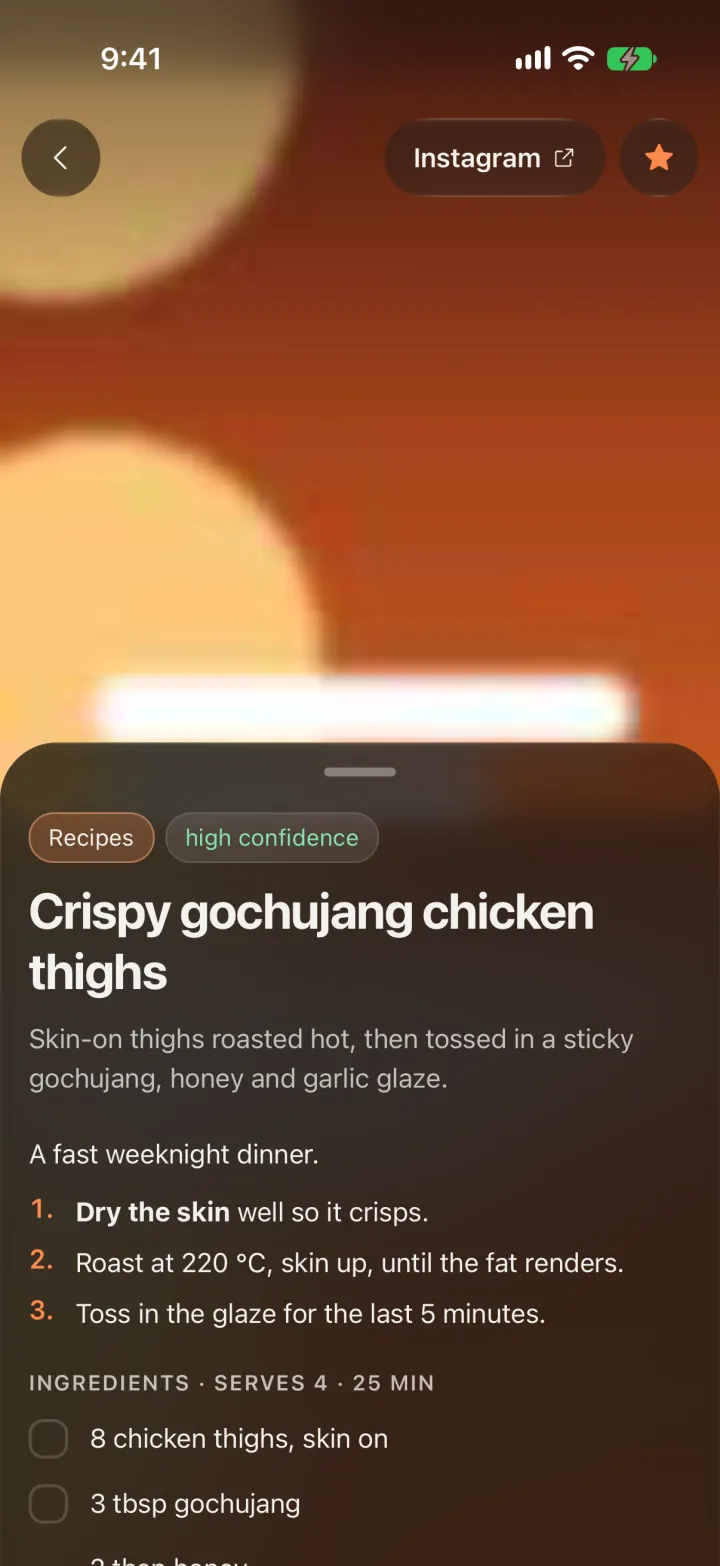
A reel’s note -
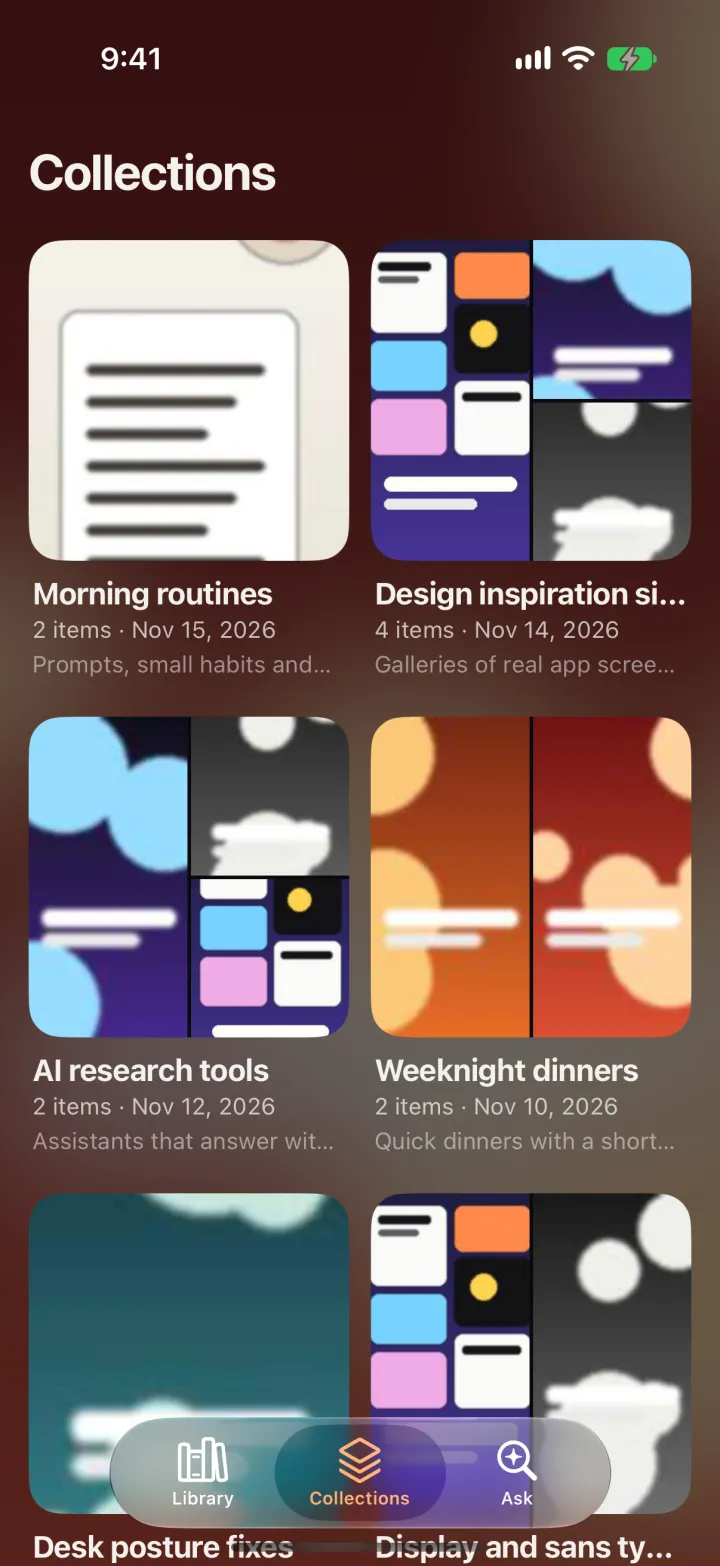
Collections -
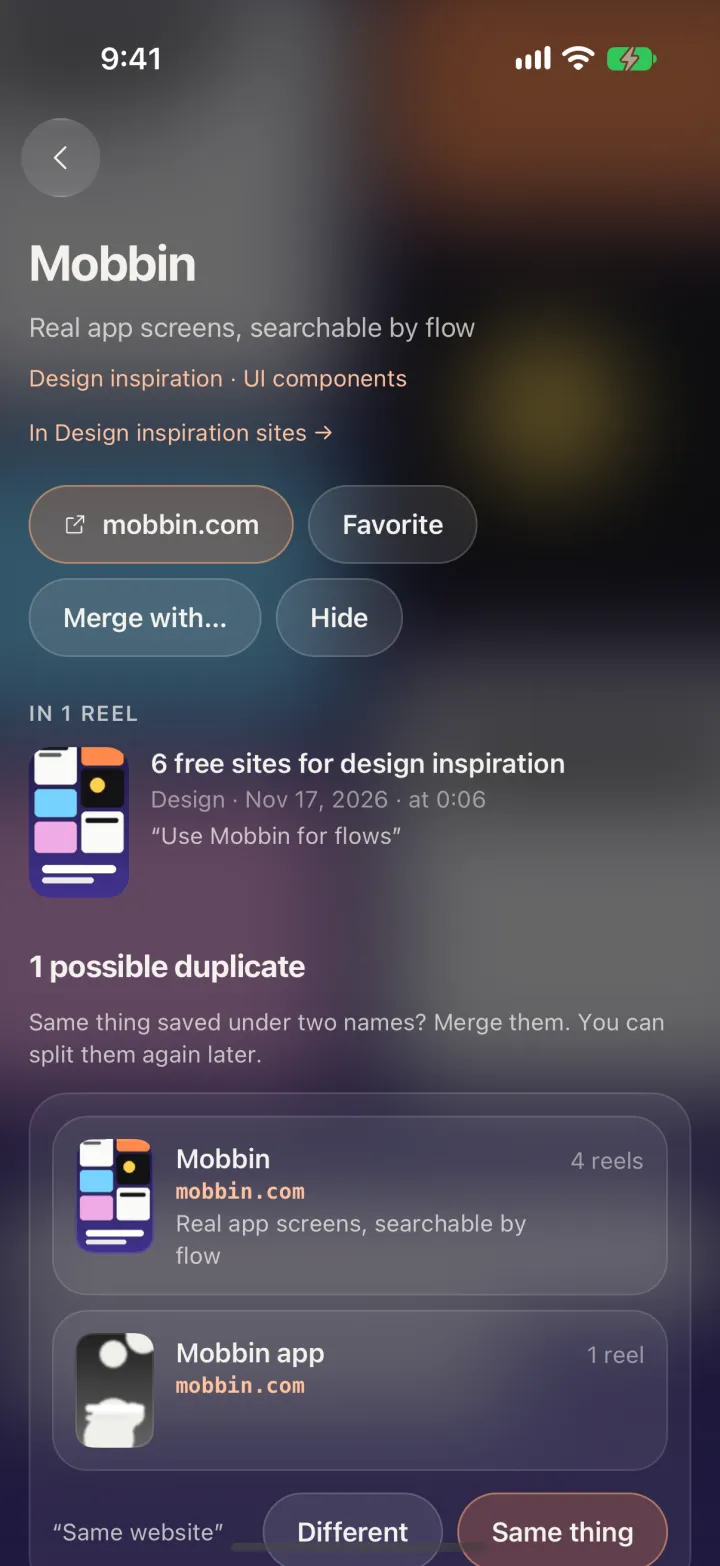
One thing, across reels -
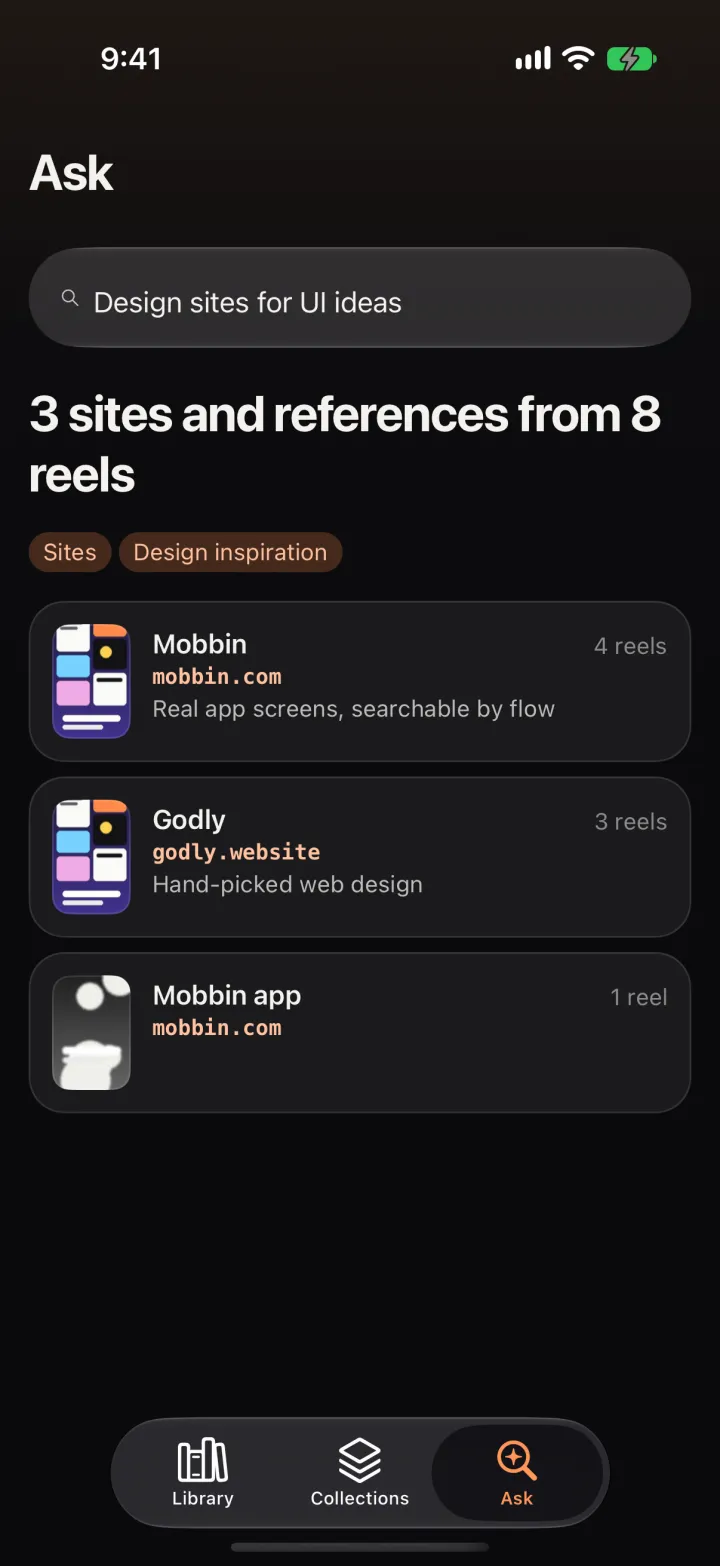
Ask
Screens from the app, showing its built-in sample library.
What it does
Save from the share sheet
A native share extension takes the reel’s link without opening the app. Share while offline or signed out and the reel waits on your phone until it can be sent.
Notes that know what they are
A recipe gets ingredients and steps, a workout gets exercises with sets, reps and rest, a design reel gets its sites, fonts and colors. Anything guessed rather than seen is marked as a guess.
Collections it finds itself
Hoard groups what your reels mention into collections and names them from what is actually in them, like “Weeknight dinners” or “Desk posture fixes”. You can rename, merge and hide them; it won’t reshuffle what you’ve arranged.
Search and Ask
Search matches words and meaning. Ask takes a question (“design sites for UI ideas”) and answers with the things in your own library, each linked to the reels it came from.
Under load
- simulated users in the load test before launch
- 1,000
- reels captured in that run, none failed
- 5,000
- median time to accept a shared reel under that load
- 0.22 s
Load test on the staging servers with the AI and fetch services simulated, November 2026.
How it’s built
One person, one monorepo, built to run without babysitting. Some of the choices that mattered:
A native iPhone app in React Native
Expo and React Native, with real Liquid Glass on iOS 26 for the tab bar, the search field and the sheets, and blur or solid fallbacks on older systems and with Reduce Transparency on. The share extension is native Swift, so saving a reel never waits for the app to launch.
Serverless backend on Cloudflare
The API runs on Cloudflare Workers, with queues for background work and Postgres on Neon. The database owns every job’s state, so a message lost or delivered twice changes nothing.
An AI pipeline with a budget
Each reel goes through a fetch, an extraction by Google Gemini into a strict schema, and indexing into a per-user knowledge graph. Every paid call goes through one global rate limiter and a spend ledger with a daily ceiling, so a burst of shares slows down instead of failing or running up a bill.
Load-tested before launch
A thousand simulated users sent 5,000 reels, two thousand of them inside ten seconds. Every capture was accepted. Getting there meant moving background work next to the database and finding a single hot row that every paid call was waiting on.
Its own design system
Tokens, glass surfaces, motion presets and primitives live in one package. Every screen state is drawn from the app’s own code into a design reference, so the design and the app can’t drift apart.
Private by construction
Every table that holds a person’s data is under row-level security in Postgres, and every endpoint is covered by a test that one account can’t see another’s data.
Pricing
Free: notes for 20 reels, for good, with search, collections and Ask.
Hoard Pro: up to 300 new reels a month and more questions to Ask, for $6.99 a month, or $39.99 a year with a 7-day free trial.
Subscriptions renew automatically until cancelled. Terms